 Parkinson Social Network
World Parkinson Congress 2019

WPC 2019 meets this week from June 4-7 in Kyoto, Japan! I’ve seen a couple of familiar faces in the social media posts leading up to this amazing event. In 2016, I was fortunate enough to attend when it was held in Portland, Oregon, and it still inspires me.
Click here to go to the WPC 2019 website.
You’ll find links to follow on social media, blog posts, webinars and more.
Virginia Lifespan Respite Voucher Program
The Virginia Lifespan Respite Voucher Program (VLRVP) provides reimbursement vouchers to Virginia caregivers who reside full-time, in the same household as the person receiving care, for the cost of temporary, short-term respite care provided to individuals, of any age, with a documented disability or special need. VLRVP is focusing on people with dementia and grandparents or relative caregivers providing care to a child not more than 18 years of age or an individual 19 to 59 years of age with a disability. Respite funding is limited to $400 per family through July 31, 2021, or until funds are exhausted. Priority will be given to assist those caregivers with the greatest social and economic need. Click here for details.
This information came from an e-newsletter, Access Fairfax: News & Events for People with Disabilities 05-22-19 from Fairfax County, DFS Disability Services. For more infromation about what this department offers, call 703-324-5421 TTY 703-449-1186 or e-mail disabilityservices@fairfaxcounty.gov.
Thank you, Angela, for sharing this with us!
Dance for PD® – streamed class for May
Anyone can join these classes from the comfort of their home! This particular class is taught by Heather Waldon. Click here to view and participate in Heather’s class. There’s a new class available every month, usually with a different teacher, too. To check out their archive and keep on movin’ to the music click here.
A Special Thank Your for Allegiance Aging Care Services
At our Cafe Ashburn in May, we had more people turn out than we were expecting – which was great! I want to thank Eric from Allegiance Aging Care Services for coming to our rescue and dashing out to get us some extra sandwiches. And helping us with tables and chairs, and directing people, and . . . Thanks, Eric!
Wheelchair equipped van for sale
Karen sent us this message to share with you. A friend of hers who had MS for many years recently passed away. Her husband is selling their 2011 Toyota Sienna XLE Braun Entervan XT. Here is the link to his listing on Craigslist: https://washingtondc.craigslist.org/nva/cto/d/falls-church-2011-toyota-sienna-xle/6888635136.html.
Could you please share with anyone who may be interested?
Aging Well in Alexandria
For those of you in Alexandria, we have the latest issue of Aging Well in Alexandria from Senior Services of Alexandria. Click here to read!
Hope to see you out and about this week! Will you be celebrating 35 years with Insight Memory Care Center on Wednesday? (Details here)
Cheers,
Sonia
email: Sonia@ParkinsonSocialNetwork.org
Taking Care of Our Minds & Bodies
At our cafes this week
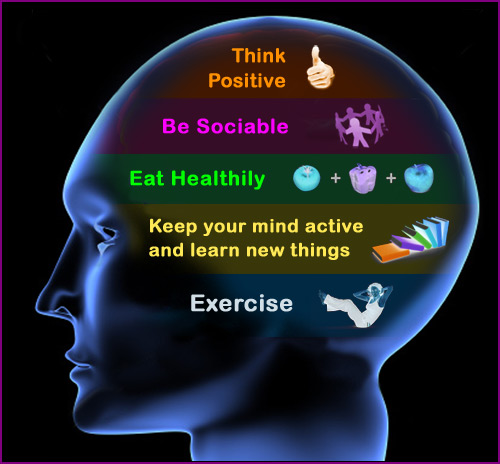
Last week was a 2 cafe week, and we were in Alexandra and Ashburn. Mike Harrigan from the Braining Center talked to us about the benefits of his Power Braining program and we followed along on parts of videos of classes. If you see people walking around squeezing their left ear lobe with the fingers of their right hand, and touching their nose with left hand, then switching, and switching, and switching, while marching in place and answering mathematical equations . . . well, you get the idea. If you missed our cafes this month, you can watch videos about the program on the Braining Center website. Click here for more info.
Memory Rescue
With all that we heard about brain and body fitness at our cafes this month, we also heard that there will be a show this week on PBS that might be of interest. It is called Memory Rescue with Daniel Amen, MD. “The award-winning psychiatrist, neuroscientist and author demonstrates ways to strengthen memory and treat major risk factors that destroy the brain.” I found it on the WETA schedule on Thursday, May 30 at 8:00 pm.
Famous people diagnosed with Parkinson’s
During April, Parkinson’s Awareness Month, we talked about famous people who have lived or are living with Parkinson’s. Quite a few people first learned about Parkinson’s because of these famous people. Here’s a link to a list on Wikipedia to a List of People Diagnosed with Parkinson’s Disease. Thank you, Karl, for sharing!
 News from Insight Memory Care Center (IMCC)
Special Caregiver workshop
Saturday, June 8, 2019 | 11:00 am – 3:00 pm
At: Hollin Hall Senior Center
1500 Shenandoah Road, Alexandria, VA 22308
Join us for this special Caregiver Workshop with Pete Shrock, nationally known grief and crisis responder, focusing on building resilience through caregiving challenges.
11:00-12:30 | DISCUSSING GRIEF
Many think of grief as something that only happens after a loved one’s death. However, as a caregiver, you may experience grief for your loved with a diagnosis of dementia while they are still living. It is important to recognize this grief and take steps to manage your stress as a caregiver, and even more importantly, keep yourself healthy!
1:30-3:00 | JUGGLING ACT OF THE MODERN CAREGIVER
The modern caregiver is overworked and xhausted: between providing care for family members, upholding social relationships and career commitments, and managing mental and physical health, life can feel like a juggling act. Learn practical steps a caregiver can take to balance these commitments, and tackle stigmas and negative self-talk caregivers sometimes face.
DETAILS
This is a free event, and all caregivers and family members are invited to attend. Lunch will be provided!
Register online at: aarp.cvent.com/Caregivers0608 or call 877-926-8300.
Cheers,
Sonia
email: Sonia@ParkinsonSocialNetwork.org