 Parkinson Social Network
A Holiday Concert and a Poem About Parkinson’s

You are invited . . . to Encore Chorale’s Holiday Concert!
Friday, December 13, at 7:30 pm
At: Heritage Fellowship Church
2501 Fox Mill Road, Reston, VA 20191
Encore Chorales of Reston and Fairfax sing traditional and contemporary seasonal music, such as:
• Beethoven’s Festival Hymn to Joy
• Amen! Tell It on the Mountain!
• Drum, Rum Tum (Hanukkah)
• Hallelujah Chorus from Handel’s Messiah
• Here We Come A-Caroling
• Let It Snow!
Encore Chorale concerts are free and open to the public.
No tickets or reservations needed. Free parking on site.
For information: Encore Chorale of Reston
EncoreReston@gmail.com
Visit: www.EncoreCreativity.org
Usta Could – A poem about Parkinson’s
by John Giannico
(first read aloud to the VCU College of Pharmacy Class of 2021 by
their professor, Dr. Emily Peron on October 4, 2019, Richmond VA)
Susan Dietrich, Coordinator for the American Parkinson Disease Association at UVA sent us this poem written by a gentleman living with Parkinson’s.
Susan wrote, “The poem is wonderful, and I wanted to share it far and wide. Page 1 of the attachment is the poem; page two of the attachment includes John’s thoughts about participating in this panel and writing the poem.”
Click here to read John’s poem. Thank you, Susan!
Parkinson’s Piedmont Support Group visit
This afternoon I visited the Parkinson’s Piedmont Support Group in Warrenton to give my presentation: Prepare For Your Care: How to Go Home From Hospital in Better Shape Than When You Went In. Frank Wright, ambassador for the Parkinson’s Foundation Aware in Care patient safety kit program joined me to explain why the kit is helpful and what is in it.
If you’d like us to visit your support group to talk about how to prepare for your care, including hospital, rehabilitation and doctor visits, or if you would like Frank to visit your support group, please contact me at sonia@ParkinsonSocialNetwork.org.
Cafe Fairfax this Wednesday
Slight change of plans as far as our topic is concerned this month!
Bonnie O’Leary from the Northern Virginia Resource Center for Deaf and Hard of Hearing Persons will be our visitor. Bonnie will focus on the challenges of hearing loss for caregivers, which is appropriate given that November is National Family Caregiver Month!
I hope this newsletter is helpful and we’ll see you Out & About soon! Will we see you on Wednesday?
Cheers,
Sonia
email: Sonia@ParkinsonSocialNetwork.org
Resources for Veterans and Caregivers

Veteran’s Day
In honor of Veteran’s Day I thought this was a good time to share a few resources that may be helpful for Veteran’s living with Parkinson’s.
• Click here for information from the American Parkinson Disease Association (APDA).
• On the APDA web page, they refer to Parkinson’s Disease Research, Education and Clinical Centers or PADRECC. Click here to check out information about our nearest center in Richmond.
• Parkinson’s Foundation has several articles of interest to veteran’s. Please click here to read more.
• AARP also has a Military Caregiving Guide: for Veterans, Service Members and Their Families. Click here for the PDF version of the booklet.
Caring for our Caregivers
 On Saturday, in recognition of National Family Caregivers Month, Parkinson Social Network honored our caregivers at our second annual caregiver appreciation luncheon! Our keynote speaker, Martha Brettschneider spoke to our caregivers about Mindfulness Tools to Manage Caregiver Stress , Boost Resilience, and Stay Connected to What Matters Most. Our caregivers enjoyed this special time with Martha, with many of them chatting with her over lunch.
We have many thank yous to:
Our Hosts: Insight Memory Care Center, in particular Lindsey & Katelyn
Our Speaker: Martha Brettschneider and her friend Carolyn Bagdoyan
 Our Sponsors:
Old Dominion Home Care and Alexandra Johnson for our yummy lunch from Alexandria Pastry Shop,
SYNERGY Home Care for providing care for our Parkinson friends,
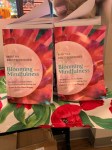
Five Star Home Health Care for making it possible for every caregiver to take home a copy of Martha’s book, Blooming Into Mindfulness,
Allegiance Aging Care Services for donuts & coffee,
Patrice DeHaven of Carried Away Gifts and Margaret Sutton & Graceful Care for the beautiful gift baskets they donated.
Our PSN Board of Directors: Karl & Angela, Ruth Ann, Arlene, Nancy, and friends Regina and Sandra
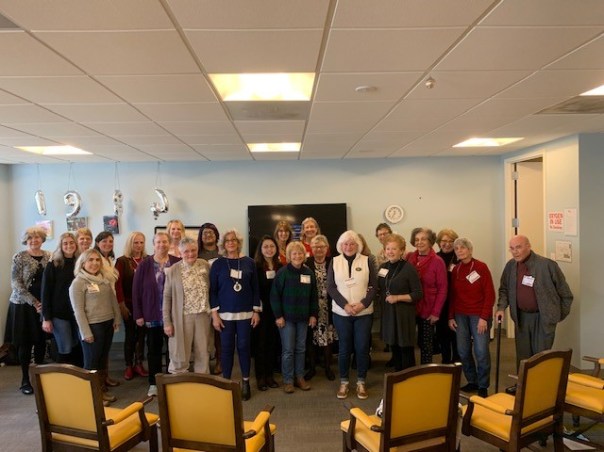
Hope to see you all again next year!
Ask the MD Video: Tips for Parkinson’s Care Partners
Courtesy of the Michael J. Fox Foundation:
Parkinson’s doesn’t just affect the person diagnosed with the disease; it can impact loved ones, family members and close friends, too. For some, that means caring for someone with Parkinson’s disease. Being a care partner looks different depending on where a person is in their disease journey, your relationship, and how much help a person wants or needs. But no matter what, it means caring for your own well-being while caring for another’s, which can be tough.
Click here to watch the video for tips on caring for yourself and someone with Parkinson’s.
The Fall/Winter issue of the Parkinson’s Foundation Parkinson Report is dedicated to caregivers with articles such as these.
• Caregiver Checklist
• From Choir to Care: Navigating Parkinson’s Together
• Top 10 Caregiver Resources
• Care Partners Tell us How Collaborative Care Makes Life Better
Click here to read their newsletter.
I attended the first trial session for this class last week and it was a delightful class enjoyed by the people with Parkinson’s who attended it, along with their family members. This was the first trial class, and sadly was not well attended, but it was an excellent class led by Tom and Kevin. They had people moving without all the seriousness and boredom of conventional exercises. Breathing, voice, physical movement and brain activities were all incorporated. Tom and Kevin are both very personable and knowledgeable, and their empathy and passion touched us all. There will be another trial session in December if you’d like to give it a try!
Neuro Notes: Music for the Mind
free 90 minute trial session
Thursday December 5
from 12:30 pm – 2:00 pm
At: 8100 Innovation Park Drive, conference Room N4, Fairfax, VA 22301
Singing | Rhythmic Exercises | Music Listening
Singing can enhance voice volume and quality as well as improve respiration and swallowing. Music may also improve mood and cognitive function. The group music experience is also a great way to socialize!
Instructor: Toni Sweitzer, MMT, MT-BC, Co-founder and Creative Director of A Place to Be.
Questions? Contact myinovawell@inova.org.
To register, click here, then scroll down to Exercise for Life, and click on the down arrow next to Neuro Notes.
If you live in Alexandria, this event may be of interest to you. We enjoy our chats in the summer months when we talk about travel, and this event sounds like it will lots of information and ideas.
Senior Services of Alexandria – Speaker Series
On the Move: Travel Near and Far
Thursday, November 14, 10:00 am – Noon (Registration at 9:30 am)
At: Westminster Presbyterian Church
2701 Cameron Mills Road, Alexandria
Come learn all about the health benefits of travel for older adults, what DASH is doing to improve services for city residents, discover opportunities for leisure travel and enrichment and how to enjoy a relaxing trip along the Potomac River. You will hear from representatives of AARP, DASH, Potomac Riverboat Company and the Road Scholar Travel Program. RSVP at 703-836-4414, ext. 110 or at SpeakerSeries.
Northern Virginia Dementia Care Consortium 33rd Annual Caregivers Conference
Today
This was an amazing day! We learned about:
• Dementia Friendly Virginia including what’s new with the Dementia Friendly initiative in Northern Virginia,
• the Art of Dementia Care where we also learned about the Best Friends Approach and the importance of socialization,
• Ethical Challenges in Dementia Care which was fascinating and
We also enjoyed a delicious lunch, caught up with old friends and met new ones!
I hope this newsletter is helpful and we’ll see you Out & About soon! This week we have our Side by Side support groups in Arlington. Will we see you there?
Cheers,
Sonia
email: Sonia@ParkinsonSocialNetwork.org




 Parkinson Social Network